
the basics of swing trading
What is Swing Trading?
Swing trading is a trading technique that traders use to buy and sell stocks when indicators point to an upward (positive) or downward (negative) trend in the future, which can range from overnight to a few weeks. Swing trades aim to capitalize on buying and selling the interim lows and highs within a larger overall trend.
Traders use technical indicators Technical Analysis - A Beginner's Guide Technical analysis is a form of investment valuation that analyses past prices to predict future price action. Technical analysts believe that the collective actions of all the participants in the market accurately reflect all relevant information, and therefore, continually assign a fair market value to securities. to determine if specific stocks Common Stock Common stock is a type of security that represents ownership of equity in a company. There are other terms – such as common share, ordinary share, or voting share – that are equivalent to common stock. possess momentum and the best time to buy or sell. To exploit the opportunities, the traders must act quickly to increase their chances of making a profit Gross Profit Gross profit is the direct profit left over after deducting the cost of goods sold, or cost of sales, from sales revenue. It's used to calculate the gross profit margin. in the short-term.
How Swing Trades Works
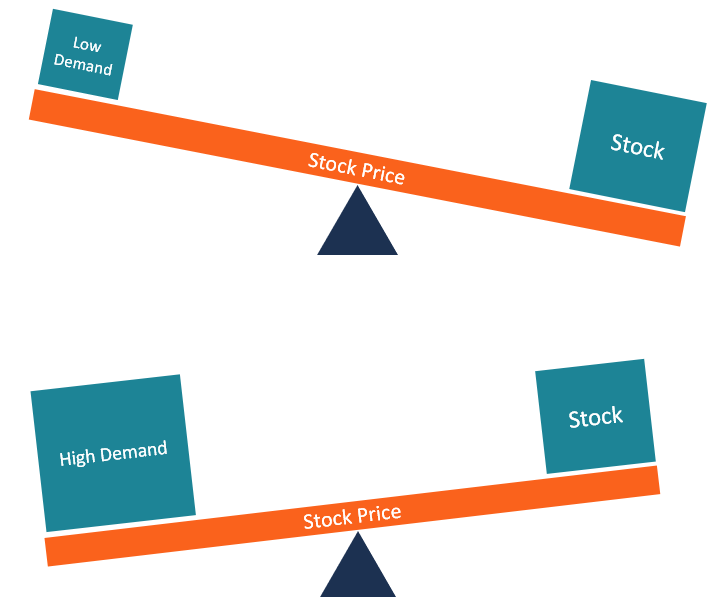
Swing trading seeks to capitalize on the upward and downward "swings" in the price of a security. Traders hope to capture small moves within a larger overall trend. Swing traders aim to make a lot of small wins that add up to significant returns. For example, other traders may wait five months to earn a 25% profit, while swing traders may earn 5% gains weekly and exceed the other trader's gains in the long run.
Most swing traders use daily charts How to Read Stock Charts If you're going to actively trade stocks as a stock market investor, then you need to know how to read stock charts. Even traders who primarily use fundamental analysis to select stocks to invest in still often use technical analysis of stock price movement to determine specific buy and sell, stock charting (like 60 minutes, 24 hours, 48 hours, etc.) to choose the best entry or exit point. However, some may use shorter time frame charts, such as 4-hour or hourly charts.
Swing Trades vs. Day Trading
Swing trading and day trading appear similar in some respects. The main factor differentiating the two techniques is the holding position time. While swing traders may hold stocks overnight to several weeks, day trades close within minutes or before the close of the market.
Day traders do not hold their positions overnight. It often means they avoid subjecting their positions to risks Systemic Risk Systemic risk can be defined as the risk associated with the collapse or failure of a company, industry, financial institution or an entire economy. It is the risk of a major failure of a financial system, whereby a crisis occurs when providers of capital lose trust in the users of capital resulting from news announcements. Their more frequent trading results in higher transaction costs, which can substantially decrease their profits. They often trade with leverage in order to maximize profits from small price changes.
Swing traders are subjected to the unpredictability of overnight risks that may result in significant price movements. Swing traders can check their positions periodically and take action when critical points are reached. Unlike day trading, swing trading does not require constant monitoring since the trades last for several days or weeks.
Trading Strategies
Swing traders can use the following strategies to look for actionable trading opportunities:
1. Fibonacci retracement
Traders can use a Fibonacci Fibonacci Numbers Fibonacci Numbers are the numbers found in an integer sequence discovered/created by mathematician, Leonardo Fibonacci. The sequence is a series of numbers retracement indicator to identify support and resistance levels. Based on this indicator, they can find market reversal opportunities. The Fibonacci retracement levels of 61.8%, 38.2%, and 23.6% are believed to reveal possible reversal levels. A trader might enter a buy trade when the price is in a downward trend and seems to find support at the 61.8% retracement level from its previous high.
2. T-line trading
Traders use the T-line on a chart to make a decision on the best time to enter or exit a trade. When a security closes above the T-line, it is an indication that the price will continue to rise. When the security closes below the T-line, it is an indication that the price will continue to fall.
3. Japanese candlesticks
Most traders prefer using the Japanese candlestick charts since they are easier to understand and interpret. Traders use specific candlestick patterns to identify trading opportunities.
Additional Resources
Thank you for reading CFI's explanation of swing trading. CFI offers the Capital Markets & Securities Analyst (CMSA)® Program Page - CMSA Enroll in CFI's CMSA® program and become a certified Capital Markets &Securities Analyst. Advance your career with our certification programs and courses. certification program for those looking to take their careers to the next level. To keep learning and advancing your career, the following resources will be helpful:
- Long and Short Positions Long and Short Positions In investing, long and short positions represent directional bets by investors that a security will either go up (when long) or down (when short). In the trading of assets, an investor can take two types of positions: long and short. An investor can either buy an asset (going long), or sell it (going short).
- Momentum Investing Momentum Investing Momentum investing is an investment strategy aimed at purchasing securities that have been showing an upward price trend or short-selling securities that
- Trade Order Timing Trade Order Timing - Trading Trade order timing refers to the shelf-life of a specific trade order. The most common types of trade order timing are market orders, GTC orders,
- Investing: A Beginner's Guide Investing: A Beginner's Guide CFI's Investing for Beginners guide will teach you the basics of investing and how to get started. Learn about different strategies and techniques for trading
Source: https://corporatefinanceinstitute.com/resources/knowledge/trading-investing/swing-trading/
0 Response to "the basics of swing trading"
Post a Comment